
A small reading nook without buying new furniture
20 November 2026
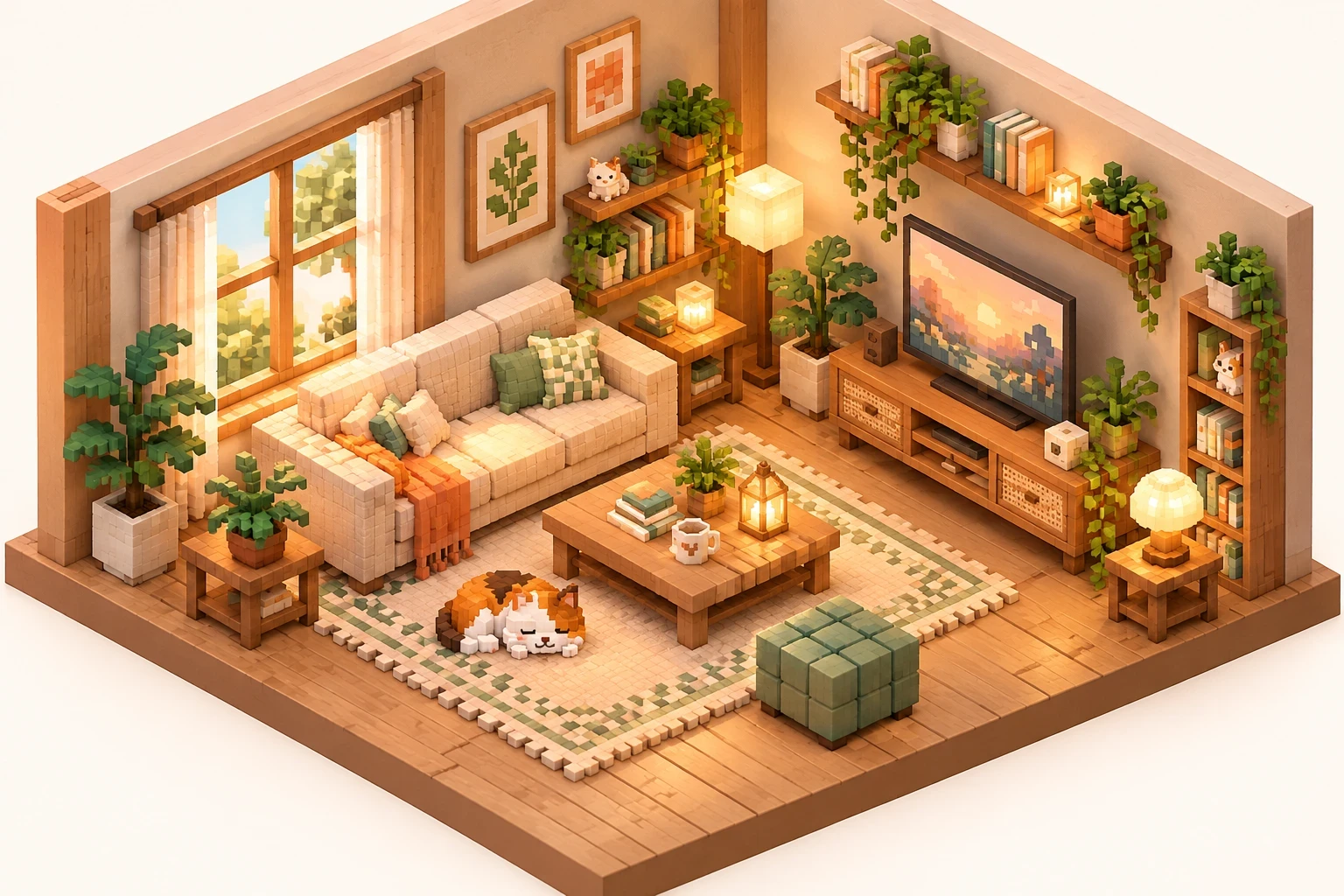
To make a small reading nook, start with a seat you already like, move a lamp beside it and clear a reachable place for your book. Try that arrangement for an evening before adding furniture. A sofa end can do the job; a separate armchair is optional.
The voxel illustration above is inspiration, not a photograph or a promise that every pictured object is available in Homebit.
Find a seat before you find a corner
Choose somewhere you already sit comfortably with a book. An empty corner may look inviting, but adding a chair there can block the wardrobe or turn the route to the window into an obstacle course.
Take your book to two existing seats and read a few pages in each. Notice where you put your elbows, whether you keep shifting and where you naturally leave the book when you stand up. Those observations are more useful than buying a chair to match a picture.
IKEA’s armchair-corner guide recommends directed light and a nearby side table. Use those functions as your starting point, even if your seat is a sofa and your surface is an existing bedside table.
Compare three arrangements using what you own
These are suggested arrangements to try, not measured floor plans. Choose the one that changes the fewest things in your room.
| Existing seat | First change to try | What to check before keeping it |
|---|---|---|
| One end of the sofa | Move a reading lamp beside that end; clear the adjacent table | Can someone use the other seats without stepping over your books or cable? |
| A spare armchair | Turn it slightly towards the room, with a small surface beside the armrest | Can you sit down and stand up without moving the table? |
| A chair in the bedroom | Borrow the bedside lamp and use the bedside table for your book | Can the wardrobe and bedroom door still open fully, including when someone is seated? |
If all three require blocking something, use an existing seat temporarily rather than forcing a permanent nook. For a bedroom where the bed and storage compete for space, work through the small bedroom layout guide first.
Test the lamp after dark
A window makes a corner look bright in a photograph. It does not tell you how the same seat works when you actually read in the evening.
Sit in your usual position and direct an adjustable lamp towards the open book, as IKEA’s guide suggests. Move it until your head no longer casts a shadow across the page and the bulb is out of your direct line of sight. If you use an e-reader, check for a distracting reflection too. Try repositioning an existing lamp before deciding that you need a different one.
Keep the cable out of the route through the room. Follow the lamp manufacturer’s instructions about placement and nearby textiles; do not drape a throw over the lamp to soften its light.
For the rest of the room, the cosy room guide covers texture, repeated colours and smaller pools of light.
Run an evening trial before adding decoration
Here is a suggested test you can repeat for each arrangement:
- Put one book and your usual drink on the nearby surface. Can you reach them from the seat without an awkward stretch?
- Read for a while in your normal evening lighting. Adjust the lamp if you keep leaning towards the page.
- Stand up and walk your usual route. Open the doors and drawers you use every day. Repeat with someone sitting in the seat if you share the room.
- Put the book away. Does clearing up take one simple action, or does the nook spread across the floor?
Keep a short note: seat / light / reach / route / reset. Mark each as “works” or “change”. Change the failing part before adding a rug, footstool or bookshelf. This is a practical comparison exercise, not a universal clearance standard; measure your actual furniture and allow the access your household needs.
Play with the look in Homebit
If you enjoy the decorating part, Homebit lets you place, rotate and recolour furniture in little voxel rooms, with undo and redo for trying another arrangement. Compare a quiet palette with a more colourful one while keeping the furniture positions similar.
There is also a reading-nook brief for Hazel in chapter two of Maple Lane story mode. It gives you a decorating prompt if you prefer a starting point to an empty room.
Use the game to explore a mood. Check real furniture fit, reading light, reach and walking space in your own room. Your best nook is the one you return to with a book, even when it is simply the end of the sofa.