
How to make a small kitchen feel cosy
27 November 2026
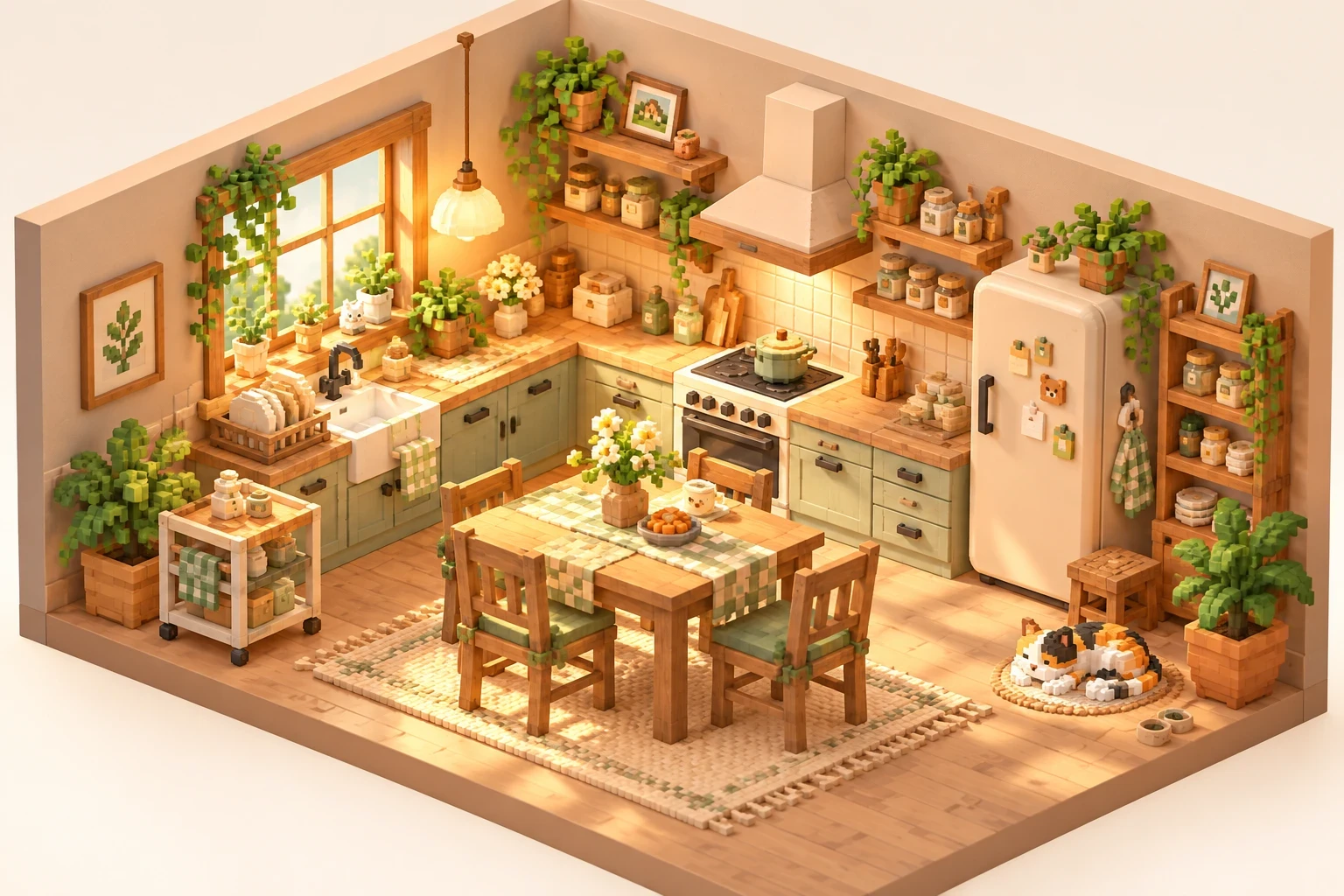
To make a small kitchen feel cosy, keep your working surface clear and add warmth around it. Soften the light, bring in wood and fabric away from the hob, and find a little space to sit or linger. Start with what you own, using changes you can undo when you move.
Protect the space you cook in
Walk the route between your sink, hob and fridge. Notice where you turn, open doors and put things down. Then identify the stretch of worktop you actually use to chop vegetables, prepare lunch or set down a bowl.
Look at what lives on that surface. Anything you do not use every day can move into a cupboard or somewhere else suitable. Keep everyday tools within reach, but leave enough empty space to prepare food without first rearranging the kitchen.
Add warmth around this working area: on a window ledge, beside a seat or on an existing shelf. You should be able to cook just as comfortably after decorating.
Warm the light first
A ceiling light on its own can make a small kitchen feel cold, especially when it leaves the corners dark. Keep the light you need for cooking, then try a warmer light lower down.
Use a suitable worktop light, or place a small lamp in a dry corner away from splashes and heat. Keep its cable out of the sink area and your preparation space. Check that you can still see clearly when chopping or washing up.
In the evening, try the lights in different combinations. For ways to use lighting alongside texture elsewhere in your flat, see how to make a room feel cosy.
Show a few things, hide the rest
Choose an existing shelf or ledge for things you enjoy seeing and actually use. That might mean your everyday mugs, a few food jars or a wooden board. Give each object enough room that you can lift it down without moving everything beside it.
Leave some of the surface empty. You do not need to fill a shelf from end to end for it to feel lived in. Put spare mugs, packaging and less-used equipment behind cupboard doors where possible.
If you want a wall shelf in a rented kitchen, ask your landlord before drilling, or choose a suitable option that needs no drilling. Check its load limit before filling it.
Add wood, fabric and something green
A wooden chopping board can add warmth while earning its place in the kitchen. Store it somewhere dry and accessible after use. If you already have a wooden trolley, try it against a spare wall, keeping the route through the room clear.
Use tea towels for a little colour and texture. A fabric table runner can soften a small eating surface; move it aside whenever you need that surface for preparation. Keep fabric, plants and paper away from the hob and oven.
A plant can sit on a window ledge if its needs suit the light there. Keep the window easy to open.
Choose two or three colours and repeat them through these small details. These cosy colour palettes for a small room can help you work with the walls and flooring you already have.
Make room to linger
Look for somewhere to pause without blocking a cupboard or the route to the fridge. A stool might tuck beneath an existing counter. A sturdy ledge with room for your knees could become a small coffee spot, provided it is suitable for that use.
A little folding table can come out when needed. A trolley on wheels can move into place beside a seat, then return to its usual spot. Check where each piece will go when you are cooking.
The aim is somewhere to drink your coffee or chat while someone prepares food. You can borrow the approach from a small reading nook without new furniture: make a useful corner with what fits.
Try the arrangement first
Before buying anything, move what you already own and live with the arrangement for a day or two. Make a meal, wash up and open every cupboard. Notice whether the seat gets in your way or the lamp takes up space you need.
You can also try a small kitchen in voxels with Homebit, a free cosy game on iPhone with no adverts or account. You decorate small voxel rooms, and the editor’s Kitchen tab contains a sink, stove and fridge.
Place, move, rotate, duplicate and delete furniture, with undo and redo available. Lamps switch on and off and light the room locally. You can hang decorations on walls and put small objects on furniture surfaces. Each object comes in six colourways: original, walnut, whitewashed, rose, sage and sky.
In the story mode, Maple Lane, chapter 3 is “Theo’s little kitchen”. Theo the baker asks for a fridge, stove, sink, table and two chairs to share breakfast.
Homebit is not a planning tool: it has no real dimensions or scale plans. Return to your kitchen’s actual measurements, including door openings and the space you need to move, before buying anything.